+947 11 88 8844

Mon – Fri : 8 AM – 5 PM

Why Having a Mobile-Responsive Website Is Critical in 2026

Why Having a Mobile-Responsive Website Is Critical in 2026

Did you know that over 80% of website visitors now use smartphones to browse the internet? In 2026 and beyond, a mobile-responsive website isn’t just a nice-to-have — it’s a must-have for any serious business. Whether you’re a startup, e-commerce brand, or established company, your website must perform flawlessly on every screen size to compete online.

At Graphics LK, we specialize in designing mobile-optimized, high-converting websites for businesses across Sri Lanka and beyond. In this article, we’ll break down why mobile responsiveness matters and how it directly affects your SEO, user experience, and sales.


✅ What is a Mobile-Responsive Website?

A mobile-responsive website automatically adjusts its layout, content, and features based on the screen size and device used — whether it’s a phone, tablet, or desktop. It ensures users can easily navigate, read, and interact with your website without pinching, zooming, or waiting forever for it to load.


🔍 Why Mobile Responsiveness Matters in 2026

1. Most Web Traffic Comes from Mobile

Google reports that more than 60-70% of global web traffic comes from mobile devices — and in Sri Lanka, that number is even higher. If your site isn’t mobile-ready, you’re losing most of your audience.

2. Google Prioritizes Mobile-Friendly Websites (SEO)

Since Google’s mobile-first indexing, websites that are not mobile-optimized rank lower in search results. That means poor visibility, less traffic, and fewer leads.

3. Better User Experience = More Conversions

A mobile-responsive site ensures visitors stay longer, engage more, and are more likely to convert into customers. Fast loading, clear navigation, and easy tap targets improve the overall user journey.

4. Faster Load Times Matter

Mobile users are impatient. If your site takes more than 3 seconds to load, you could lose up to 50% of your visitors instantly. Mobile optimization includes compressed images, clean code, and fast servers.

5. It Builds Trust and Credibility

A broken mobile site feels unprofessional and outdated. Your website is your digital storefront — and first impressions matter. A sleek mobile experience builds brand credibility and trust with your audience.


🚀 How Graphics LK Can Help

We design and develop websites that are:

  • ✅ Fully mobile-responsive

  • ✅ Optimized for fast loading

  • ✅ SEO-friendly

  • ✅ Easy to manage and update

  • ✅ Designed to increase your sales

Whether you need a new website or want to revamp your existing one, our team at Graphics LK is ready to help.


📞 Contact Us Today

📩 Email: [email protected]

📱 Call/WhatsApp: +94 711 8888 44

🌐 Website: www.graphics.lk

\
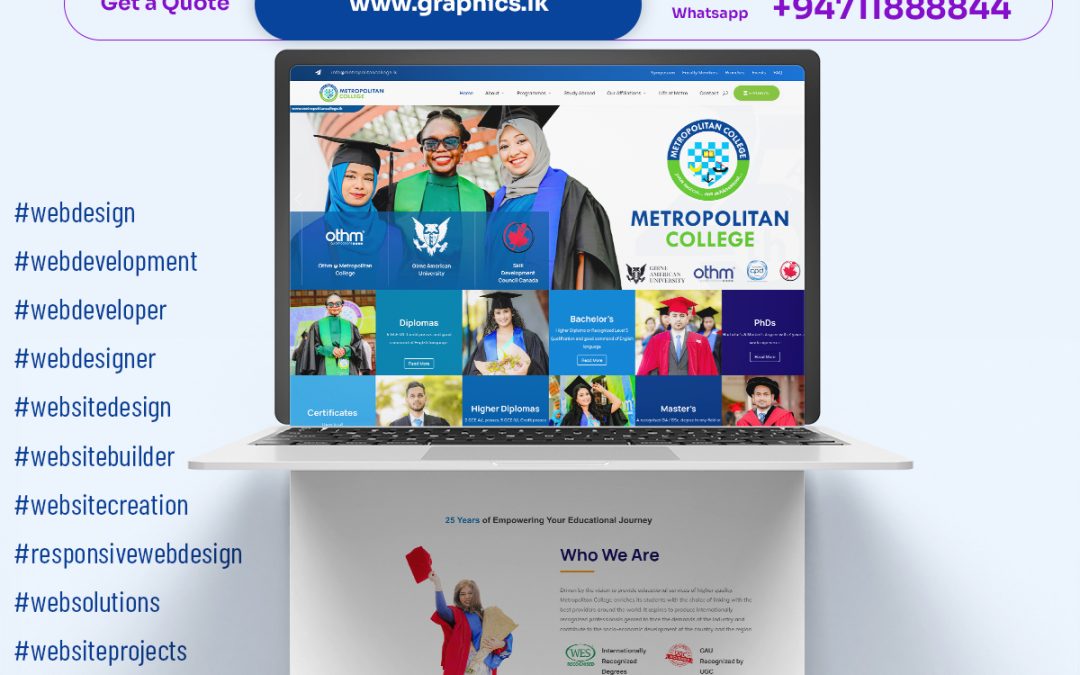
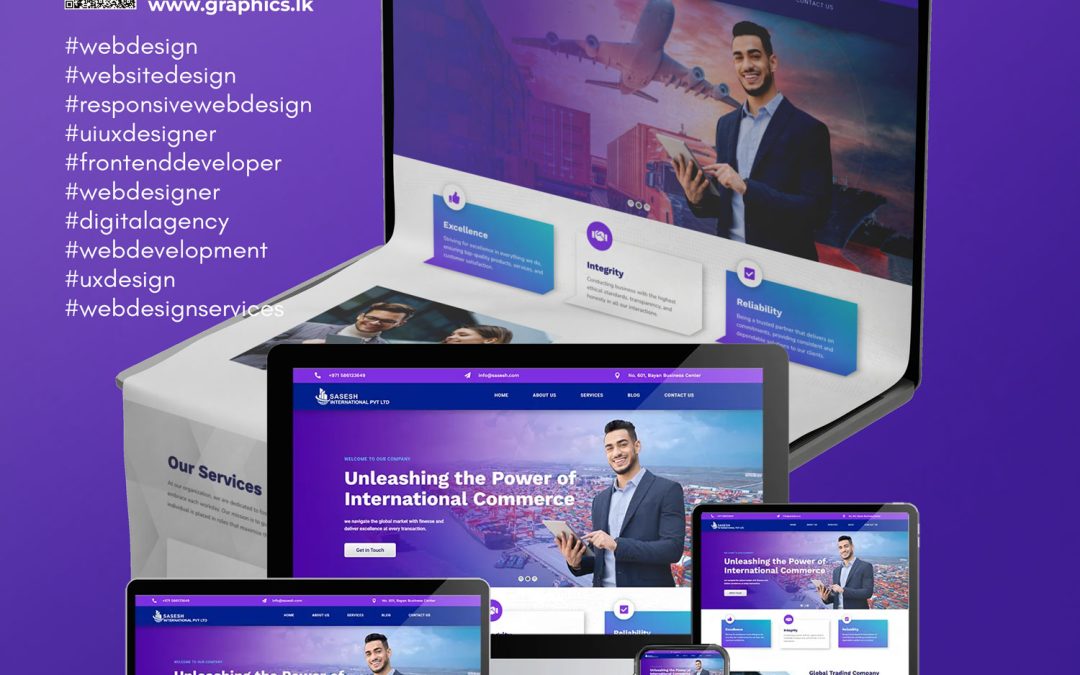
The Importance of Professional Web Design and Development for Your Business

The Importance of Professional Web Design and Development for Your Business

In today’s digital-first world, your website is often the first impression customers have of your brand. A well-designed and well-developed website is no longer optional—it’s essential for business growth. Whether you’re a startup, small business, or enterprise, investing in professional web design and development can transform your online presence.


🌐 Why Web Design Matters

Your website is your digital storefront. A poorly designed site can drive potential customers away, while a clean, modern, and responsive design builds trust.

Key benefits of good web design:

  • User-Friendly Navigation – Helps visitors find what they need quickly.

  • Mobile Responsiveness – Over 60% of users browse on mobile devices.

  • Strong Branding – A consistent design improves brand recognition.

  • Conversion Focused – Guides visitors toward calls-to-action (buy, contact, subscribe).


⚙️ Why Web Development Is Equally Important

Behind every beautiful website is powerful web development. Good development ensures your site is fast, secure, and scalable.

Core aspects of quality development:

  • 🔒 Security Features – Protects your site and customer data.

  • Performance Optimization – Faster loading speeds improve SEO and user experience.

  • 🛠️ Custom Functionality – From eCommerce to booking systems.

  • 📈 SEO-Friendly Coding – Helps your site rank higher on Google.


💼 Types of Websites You Can Build

  • 🛍️ eCommerce Websites – Sell products online.

  • 🏢 Corporate Websites – Showcase your company and services.

  • 🎨 Portfolio Websites – Display your creative work.

  • 📚 Educational Websites – Offer online learning.

  • 📰 Blogs & News Portals – Share information and updates.


🚀 Why Choose Our Web Design & Development Services?

We create websites that are not only visually appealing but also strategically designed to convert visitors into customers. Our services include:

  • 🎨 Custom Web Design

  • ⚙️ Front-End & Back-End Development

  • 📱 Mobile Responsive Design

  • 🛒 eCommerce Website Development

  • 🔍 SEO-Optimized Websites

  • 🔧 Website Maintenance & Support


📢 Final Thoughts

A website is more than just an online presence—it’s a powerful business tool. By investing in professional web design and development, you can build credibility, attract more customers, and grow your brand in the digital space.

👉 Looking to build or upgrade your website? Contact us today to get started!

Essential Web Development Skills for 2025

Essential Web Development Skills for 2025

Landing page importance

Essential Web Development Skills for 2025

Web development is evolving rapidly, and staying ahead means mastering the latest technologies, frameworks, and best practices. Whether you’re a beginner or an experienced developer, understanding these essential web development skills for 2025 will help you build faster, more secure, and scalable applications.

1. Mastering Core Web Technologies

The foundation of web development remains HTML, CSS, and JavaScript. These technologies are essential for creating responsive and interactive web applications.

  • HTML5 helps structure content for better SEO and accessibility.

  • CSS3, including Flexbox and Grid, ensures responsive design across all devices.

  • JavaScript (ES6+) is crucial for creating dynamic and engaging user interfaces.

Staying updated with new ECMAScript features will improve code efficiency and maintainability.

2. JavaScript Frameworks and Libraries

Frontend development is dominated by JavaScript frameworks. In 2025, the most in-demand frameworks include

  • React.js – Ideal for building scalable web applications with reusable components.

  • Vue.js – Lightweight and easy to learn, perfect for small to medium-scale apps.

  • Svelte – A newer framework that compiles code for high performance.

Choosing the right framework depends on project requirements, scalability, and developer expertise.

3. Backend Development and APIs

Understanding backend technologies is essential for building robust web applications. Developers should focus on

  • Node.js – A powerful JavaScript runtime for server-side development.

  • Deno – A modern alternative to Node.js with improved security.

  • Databases – Mastering SQL (MySQL, PostgreSQL) and NoSQL (MongoDB, Firebase) for data storage.

  • RESTful APIs & GraphQL – Essential for enabling smooth communication between frontend and backend applications.

Backend development is crucial for handling data, authentication, and security in web applications.

4. Web Performance Optimization

Page speed and performance directly impact SEO rankings and user experience. To optimize performance, developers should

  • Compress images and minify CSS & JavaScript files.

  • Use lazy loading to improve load times.

  • Implement Content Delivery Networks (CDNs) for faster content delivery.

  • Optimize for Core Web Vitals to enhance user experience and SEO performance.

Performance optimization improves bounce rates, conversions, and search engine rankings.

5. Responsive and Mobile-First Design

With over 60% of web traffic coming from mobile devices, designing for mobile-first is essential. Key techniques include

  • CSS media queries to ensure adaptive layouts.

  • Progressive Web Apps (PWAs) for app-like experiences.

  • Testing across devices using tools like Google Mobile-Friendly Test and BrowserStack.

A mobile-optimized website improves user experience, accessibility, and SEO rankings.

6. Cybersecurity and Data Protection

Web security is a top priority in 2025, and developers must implement strong security measures

  • Use HTTPS and secure authentication methods like OAuth & JWT.

  • Prevent XSS, SQL Injection, and CSRF attacks through proper input validation.

  • Apply Content Security Policies (CSP) to prevent data breaches.

A secure website not only protects user data but also boosts trust and credibility.

7. Version Control and DevOps Practices

Developers should master Git and GitHub to track and collaborate on projects efficiently. Additionally, learning DevOps practices such as

  • Continuous Integration & Continuous Deployment (CI/CD) using GitHub Actions or Jenkins.

  • Docker & Kubernetes for containerized deployment and scalability.

Using DevOps tools ensures faster deployments, fewer bugs, and better collaboration.

8. AI and Machine Learning in Web Development

AI-powered features are transforming web development. Key AI integrations include

  • Chatbots for improved customer interactions.

  • AI-driven recommendation systems for e-commerce websites.

  • Voice search optimization for better accessibility.

Leveraging AI in web development enhances user engagement, automation, and personalization.

9. WebAssembly (WASM) for High-Performance Applications

WebAssembly (WASM) allows developers to run high-performance code in browsers using languages like Rust and C++. WASM is ideal for

  • Video and image editing tools

  • Gaming applications

  • Data visualization dashboards

Adopting WebAssembly can significantly boost speed and performance in web applications.

10. Soft Skills for Web Developers

Beyond technical expertise, soft skills play a vital role in a developer’s success. These include:

  • Problem-solving skills for debugging and troubleshooting.

  • Communication skills to collaborate effectively with teams and clients.

  • Adaptability to keep up with new technologies and frameworks.

Improving these skills helps developers work efficiently in fast-paced, team-based environments.

Final Thoughts

As technology advances, web developers must continuously learn and adapt. In 2025, mastering JavaScript frameworks, backend development, security, AI, and DevOps practices will set you apart in the competitive web development industry.

By focusing on these essential web development skills, you can build faster, more secure, and future-proof applications. Are you ready to level up your skills and stay ahead of the competition? Start learning today!

Need to create a modern website contact us

High-Converting Landing Page Design

High-Converting Landing Page Design

Landing page importance

High-Converting Landing Page Design

A well-designed landing page can be the difference between a visitor bouncing off your site or converting into a customer. Graphic design plays a crucial role in ensuring that your landing page is not only visually appealing but also optimized for conversions. In this post, we’ll explore the key design elements and strategies that will help you create a landing page that drives results.

1. The Power of Simplicity in Design

A cluttered landing page can overwhelm visitors and cause them to leave. Simplicity is key when it comes to creating a high-converting page. Focus on clear visuals, concise content, and intuitive layout. Use white space strategically to guide the user’s eye toward the most important elements, such as the call-to-action (CTA) button.

2. Strong Visual Hierarchy: Guide Users’ Attention

Your landing page should have a visual hierarchy that naturally leads visitors through the content. Start with a compelling headline that grabs attention. Follow this with a subheading that further elaborates on your value proposition. Break up text with engaging images or icons that reinforce the message, and end with a clear, prominent CTA button.

3. Optimizing Images for Speed and Impact

Images are a powerful tool for creating a visually appealing landing page, but slow loading times can drastically hurt your conversion rate. Use optimized images that are compressed without sacrificing quality. Consider using formats like WebP or JPEG for fast load speeds.

4. Consistent Branding

A cohesive and recognizable brand identity helps build trust. Ensure that your landing page design is consistent with your overall brand aesthetics, including your logo, colors, fonts, and tone of voice. A strong visual identity reassures visitors and encourages them to take action.

5. Mobile-Responsive Design

With the majority of internet traffic coming from mobile devices, having a mobile-friendly landing page is a must. Your design should be responsive, meaning it adjusts perfectly to different screen sizes. This will ensure that your visitors have a seamless experience whether they’re on a desktop, tablet, or smartphone.

6. Clear Call-to-Action (CTA)

The call-to-action is arguably the most important element of your landing page. Make sure your CTA button is prominent, clear, and action-oriented. Use strong action verbs like “Get Started,” “Learn More,” or “Buy Now.” Place the CTA in multiple locations on the page to make it easy for visitors to take action.

7. A/B Testing for Continuous Improvement

Once your landing page is live, don’t stop there. A/B testing is essential for optimizing conversions. Test different elements such as the headline, CTA buttons, and images to see which combinations work best for your audience. Continuously analyze and tweak the design for better performance.

Creating a high-converting landing page is an ongoing process, but with smart graphic design strategies, you can dramatically improve your chances of success. By focusing on simplicity, visual hierarchy, and optimization, you’ll be able to craft a landing page that captivates visitors and encourages them to convert. Contact us to create a landing page for your website.

Want to learn more about landing pages. Visit

Boost Your SEO with Smart Graphic Design

Boost Your SEO with Smart Graphic Design

Boost your SEO with Graphic Design

Boost Your SEO with Smart Graphic Design

Did you know that you can boost SEO with smart graphic design? While most businesses focus on keywords and backlinks, visual elements impact site speed, user experience, and engagement, factors that search engines consider when ranking websites. A well-designed website keeps visitors engaged, reduces bounce rates, and enhances readability, all of which contribute to better search engine rankings.

Optimizing Images for Faster Loading Times

One of the most important aspects of SEO-friendly graphic design is image optimization. Large, uncompressed images can slow down your website, negatively affecting both user experience and search rankings. By using compressed formats like WebP, JPEG, or PNG and enabling lazy loading, you can ensure that your website remains fast and responsive.

Using SEO-Friendly Alt Text for Better Visibility

Search engines cannot “see” images, so they rely on alt text to understand their content. Writing clear, descriptive alt text with relevant keywords improves your website’s visibility in image search results and enhances accessibility for users with visual impairments.

Creating Engaging and Shareable Visuals

Custom-designed graphics, infographics, and high-quality images capture user attention and encourage social sharing, driving more organic traffic to your site. Consistent branding—using a cohesive color scheme, typography, and design elements—builds recognition and trust among visitors. Additionally, well-placed call-to-action (CTA) buttons enhance conversions by guiding users toward desired actions.

Enhancing User Experience (UX) for SEO

A cluttered or confusing website layout increases bounce rates, signaling to search engines that users are dissatisfied with the site. Well-structured navigation, clear typography, and an intuitive design ensure that visitors stay longer and explore more pages, improving SEO performance. Additionally, with the increasing number of mobile users, ensuring a mobile-friendly design is essential for maintaining search rankings.

Ready to Create an SEO-Friendly Website?

Your website deserves more than just great visuals—it needs to be optimized for search engines and user experience. At Graphics.lk, we specialize in creating stunning, SEO-optimized websites that help businesses rank higher, attract more visitors, and convert leads into customers. Whether you need a complete website revamp or a fresh new design, our expert team is here to help!

Let’s build your SEO-friendly website today! Contact us

Learn more

Augmented Reality in Web Design

Augmented Reality in Web Design

Incorporating Augmented Reality (AR) into web design is one of the most innovative trends revolutionizing the user experience. In Sri Lanka, where e-commerce and interactive web experiences are on the rise, AR can significantly elevate how businesses engage with their customers. By overlaying virtual elements onto the real world through a screen, websites can offer immersive and interactive experiences that captivate users.

For Sri Lankan businesses, especially in industries like retail, real estate, and tourism, AR can create highly engaging product demonstrations, virtual property tours, and cultural experiences. Imagine browsing through a Sri Lankan handicrafts store online and using AR to visualize how items would look in your home environment before making a purchase.

Key Benefits of AR in Web Design:

  1. Enhanced User Engagement: AR provides an interactive experience that keeps visitors engaged longer on your site.
  2. Increased Conversion Rates: By offering users the chance to visualize products in real-time, businesses can see a boost in conversions.
  3. Stand Out from Competitors: AR allows businesses to provide unique experiences that set them apart in a competitive market.
  4. Improved Customer Satisfaction: AR helps users make more informed decisions, leading to a better overall experience.

As AR technology continues to evolve, it holds great potential for Sri Lankan websites to transform how customers interact with brands, products, and services. Integrating AR into your web design not only provides a cutting-edge user experience but also helps businesses stay relevant in a rapidly evolving digital landscape.

Contact us for creative web designs.

For more information about Augmented reality in web design visit